Visiting Student Researchers in Pescara
Xi'an University of Architecture and Technology
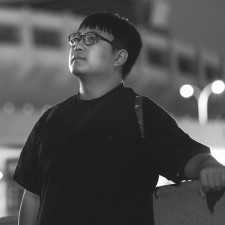
PhD Candidate: Li Xinfei
Advisor: Prof. Liu Kecheng
Co-advisor: Prof. Alessandro Camiz
E-mail: xinfei@xauat.edu.cn
Personal e-mail: xinfei02212626@gmail.com
ORCID: 0009-0002-6141-8606
Title of Dissertation: Rewriting Methods for Urban Historic Texts in Xi’an
Abstract
This study takes the core area of Xi’an—a historical city characterized by profound stratifications of heritage and contemporary architecture—as its sample. It addresses the present condition in which Chinese cities are excavating their own historical and cultural resources to reconstruct identity, a condition defined by a crisis in the sustainability of urban historical forms and a rupture between ancient and modern urban structures. By treating the city as a systematic subject of architectural case analysis, this research develops a study model based on urban historic texts, with focused discussion on how the phenomenon of morphological layering in Xi’an influences the typology of its contemporary urban architectural forms. The aim is to explore sustainable urban regeneration strategies for East Asian cities—such as Xi’an—where historical and contemporary cultural strata are intensely superimposed. Ultimately, the study seeks to propose a sustainable principle for the continued writing of urban historical morphological texts: through the study of the urban text embedded in a given site, architectural design should respond to the deep structural systems of urban historical form within the latency of the city’s material memory.
Keywords
Xi'an city; Urban morphology and architecture design; Urban historic text; Text rewriting; Urban regeneration with heritage interpretation
Xi'an University of Architecture and Technology
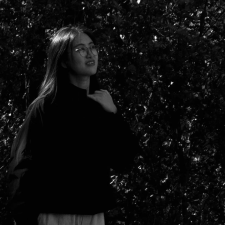
PhD Candidate: Wei Qi
Advisor: Prof. Liu Kecheng
Co-advisor: Prof.ssa Susanna Ferrini
E-mail:
Personal e-mail: vicky022126@gmail.com
ORCID: 0009-0001-1916-8474
Title of Dissertation: A Study on Qingjing-Oriented Design Methods in Architectural Practice
Abstract
“Architecture should not be understood merely as a three-dimensional physical entity, but rather as a human-centered condition constituted through perception and experience”. Qingjing-oriented design refers to a design approach in which human perception is incorporated into the establishment of the architectural theme from the very beginning of the design process and continuously guides the generation of the entire architectural spatial system. In this sense, qingjing-oriented design represents a renewed integration of the material and emotional relationship between human beings and architecture in the post-modernist era.
This study aims to identify, through the analysis of architectural works by contemporary architects, a coherent design pathway that moves from qingjing themes to architectural language, and is ultimately realized through spatial systems, surface elements, and the interaction between architecture and its surrounding environment. The paper argues that one of the fundamental pathways through which architecture generates new forms lies in the principle that form follows qingjing.
In this study, the term qingjing (情境) is derived from the Chinese linguistic and theoretical context. It refers to a composite condition defined through human aesthetic perception, encompassing interrelated factors such as time, place, subject, and emotion. Its conceptual scope is intended to enter into dialogue with related notions in Western theory, including situation, atmosphere, and sensory-bodily perception.
Keywords
Qingjing(情境),Architectural Design Methodology, Embodied Perception,Form Generation, Qingjing-Oriented Design

Xi'an University of Architecture and Technology
PhD Candidate: Yifei Xiao
Advisor: Prof. Zhendong Lei
Co-advisor: Prof. Daniela Ladiana
E-mail: yifei163ontheroad@163.com
Personal e-mail: 534205505@qq.com
ORCID: 0009-0000-3521-5640
Title of Dissertation: Research on the Steel Structure Renovation of Rural Residential Buildings
Abstract
Against the backdrop of rural revitalization in China, the demand for the conservation and adaptive reuse of vernacular rural dwellings has grown increasingly urgent.At the same time, the advancement of small-scale steel structure technologies has offered innovative solutions to address this demand. The author aims to clarify the protection levels of ordinary rural traditional dwellings in China and the corresponding utilization demands.And summarize the collaborative transformation model.Combining the relevant technologies under different steel structure construction systems.Systematize the common issues and best practices pertaining to rural development in various countries.
Keywords
Steel structure,vernacular rural dwellings,conservation and adaptive reuse,collaborative renovation model,off-site construction