Dottorandi XLII Ciclo
Dipartimento di Architettura, Università degli Studi “G. D’Annunzio” di Chieti - Pescara
PhD course: “Design Cultures: Creativity, Heritage, Environment”
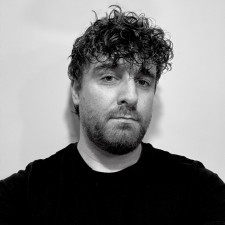
PhD Student: Davide Giffi
Tutor: Prof. Federico Bilò – Co-tutor: Prof. Alberto Ulisse, Prof.ssa Donatella Radogna
E-mail istituzionale: davide.giffi@phd.unich.it
E-mail personale: davidegiffi@gmail.com
ORCID: 0009-0009-7425-6774
Titolo provvisorio della Tesi di Dottorato: Forma Urbana ed Energia. Dal dato al progetto: strategie per la qualità energetico-spaziale dei tessuti urbani nel contesto medio-adriatico
Abstract
Il Progetto di ricerca “Forma Urbana ed Energia” mira ad analizzare la transizione energetica e climatica dei tessuti urbani esistenti, superando la sola analisi prestazionale energetica per integrarla con la qualità spaziale ed il benessere umano. Mediante un approccio data-driven - attraverso la parametrizzazione della forma urbana - la ricerca intende esplorare la relazione tra forma urbana, clima ed energia nel contesto medio-adriatico. L’obiettivo principale è l’elaborazione di un framework meta-progettuale integrando competenze architettoniche, urbanistiche, fisiche e sociologiche per definire delle linee guida basate su una matrice multi-criteriale a supporto delle amministrazioni locali, in coerenza con gli obiettivi dell’Agenda 2030.
Keywords
Progetto urbano, spazio pubblico, energia

Dipartimento di Architettura, Università degli Studi “G. D’Annunzio” di Chieti - Pescara
PhD course: “Design Cultures: Creativity, Heritage, Environment”
PhD Student: Maria Peroni
Tutor: Prof. Massimo Angrilli
E-mail istituzionale: maria.peroni@phd.unich.it
E-mail personale: maria.peroni@parcomaiella.it
ORCID: 0009-0004-6908-2689
Titolo provvisorio della Tesi di Dottorato: Landscapes of the Maiella UNESCO Global Geopark: natural forms, collective imaginary and strategies for the conservation and valorisation of symbolic place
Abstract
Exploring nature-culture connections, this study investigates how geodiversity and geoforms are culturally interpreted by local communities through myths, legends and folklore, fostering collective memory and a sense of belonging. Integrating geomythology, landscape semiotics and the iconema concept, it examines how geoforms' semantic and symbolic value, expressing cultural geosystem services and territorial identity, can shape an operational model for landscape planning. Using bibliographic, archival, cartographic and fieldwork in the Maiella Geopark, it creates a catalogue and GIS mapping of symbolic sites. Engaging with international debates on cultural landscapes and biocultural heritage, it also compares UNESCO sites to develop replicable guidelines, providing a tool to integrate intangible values into landscape plans and promote shared conservation and sustainable use strategies, from environmental education to geotourism, ecotourism, experiential tourism and thematic itineraries.
Keywords
Geomythology, iconemes and landscape semiotics, Maiella UNESCO Global Geopark, cultural geosystem services, landscape planning, conservation and sustainable valorisation
Dipartimento di Architettura, Università degli Studi “G. D’Annunzio” di Chieti - Pescara
PhD course: “Design Cultures: Creativity, Heritage, Environment”
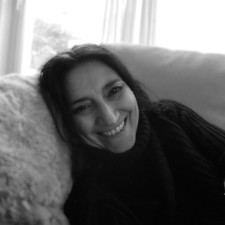
PhD Student: Caterina Terribile
Tutor: Prof. Massimo Angrilli Co-Tutor: Prof. Lucio Zazzara, Prof.ssa Gilda Antonelli
E-mail istituzionale: caterina.terribile@phd.unich.it
E-mail personale: caterina.terribile@parcomajella.it
ORCID: 0009-0008-5586-0012
Titolo provvisorio della Tesi di Dottorato: From Depopulation to Re-inhabitation: Heritage, Community and Territorial Regeneration in the Maiella National Park
Abstract
The research will investigate repopulation processes in the marginal areas of the Maiella National Park, with particular attention to the regeneration of semi-abandoned villages, small settlements, and former agricultural areas undergoing functional transformation. A key focus will be the contribution of return migrants, new residents, local associations, and community-based initiatives to the revitalisation of settlements, cultural landscapes, and local traditions. The study will examine re-inhabitation practices, the enhancement of tangible and intangible heritage, the emergence of new forms of local economy, and the adoption of lifestyles oriented towards sustainability and well-being.
To achieve these objectives, the study will employ an integrated multi-method approach, combining documentary and statistical analysis with field surveys, semi-structured interviews, and ethnographic observation. Its objective is to identify the factors that encourage people to remain, return, or settle in marginal areas and to understand how these processes reshape social relations, community participation, and territorial governance.
Keywords
Re-inhabitation; marginal areas; National Park; cultural heritage; new forms of local economy, territorial regeneretion
Dipartimento di Architettura, Università degli Studi “G. D’Annunzio” di Chieti - Pescara
PhD course: “Design Cultures: Creativity, Heritage, Environment”
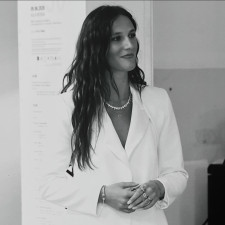
PhD Student: Chantal Zurlo
Tutor: Prof.ssa Donatella Radogna
E-mail istituzionale: chantal.zurlo@phd.unich.it
E-mail personale: chantalzurlo@gmail.com
ORCID: 0009-0007-4000-171X
Titolo provvisorio della Tesi di Dottorato: The Development of Creative Cultural Environments for the Triple Transition through AI-Driven Digital Tools
Abstract
The research explores the role of creative cultural environments as drivers of innovation, inclusion and territorial regeneration within the framework of the Triple Transition, integrating its ecological, digital and social dimensions. It aims to define a framework of design criteria, principles and strategies for creating accessible, sustainable and inclusive cultural spaces, prioritising the adaptive reuse of abandoned and underused buildings. The research investigates their spatial, material, technological and functional characteristics, assessing their potential to foster social participation, cohesion and local identity. Particular attention is given to AI-driven systems as tools supporting context assessment and the development of adaptive reuse scenarios. Through a methodology structured into three phases – knowledge, evaluation and proposal – the research seeks to develop a replicable methodological framework, validated through a pilot project, to guide the implementation of creative cultural environments across different territorial contexts.
Keywords
Sustainability, Triple Transition, Inclusion, AI-Driven Systems